


Best Printed Button-Down Dresses in the USA for Women Who Love Contemporary Fashion
There's one dress that never goes out of style - the one you grab when you don't want to think about your outfit but still want to look like you did. Right now that's the printed button-down.
It's the dress you wear to brunch, then to the office the next day, then on a flight without changing your mind about it once. Get the fabric right, pick a print that isn't everywhere already, and it stops being "just a shirt dress." It's the thing people ask about.
Cord makes that dress.
Why Cord's Button Down Dresses Actually Stand Out
Most dresses on the market are made fast and priced to match. Cord does the opposite. Their pieces come from a slow-fashion approach - natural fabrics, artisan techniques, and in-house-designed prints rather than pulled from a stock catalog.
Here's what that looks like in practice.
The fabric is the whole point: Cord works mostly in linen, cotton, and poplin — fabrics that breathe. That matters more than people think, especially through a humid American summer or a stuffy office building with unreliable AC. A button-down dress in heavy polyester will make you sweat through a meeting. One in cotton poplin won't.
Nothing is mass-produced: A lot of hand-finishing goes into these dresses — hand-smocking, block printing, and small embroidery details. It's slower work, and it shows. You can usually tell the difference between a dress that was stamped out in bulk and one that had actual hands on it.
The prints aren't recycled: Cord designs its patterns in-house each season instead of licensing generic florals that show up on five other brands. So when you wear one of these dresses, you're not standing next to three other people in the same print at a wedding.
They're built to last, not to trend: These aren't going to feel dated in eight months. The cuts are classic enough that you'll still want to wear the dress in a few years, which honestly makes it a better investment than most fast-fashion pieces at half the price.
The Best Button Down Dress Picks From Cord
If you're trying to figure out where to start, here are six button-down dresses worth knowing about.

1. Classic Button-Down Dress
Buy this one first if you're only buying one. It's cotton, in the Foliage print, with a notched collar, full button front, and a waist that skims rather than clings. Button it all the way up, and it looks put-together; leave the top two open and roll the sleeves, and it's a coffee-run dress. Nothing about the fit is trying too hard, which is exactly why it works.
2. Chloe Dress
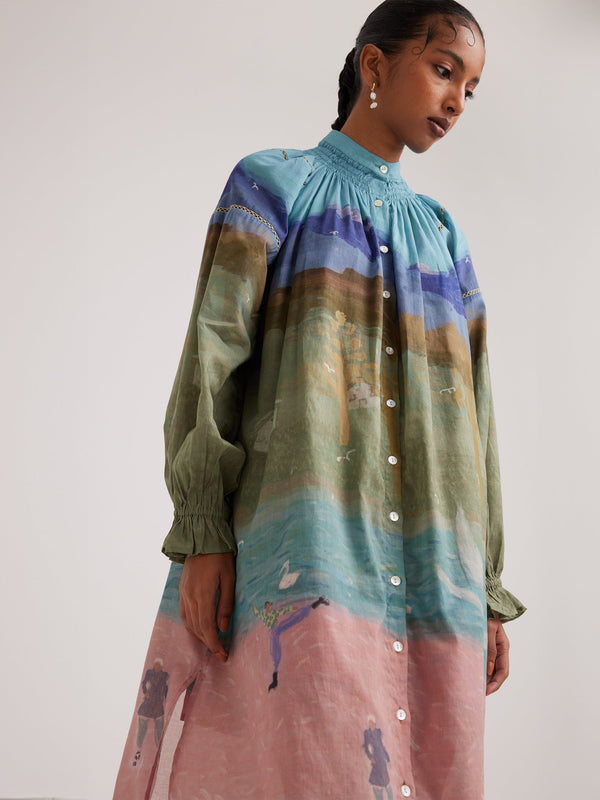
More detail than the Classic - hand-smocking at the neckline, elasticated cuffs, lace at the shoulders. The skater silhouette (fitted through the bodice, flares from the waist) is flattering on most bodies because it nips in right where you'd want it to. The ankle-length hem pushes it past "shirt dress" territory - this is the one for a dinner or a garden party, not a grocery run.
3. Jane Dress
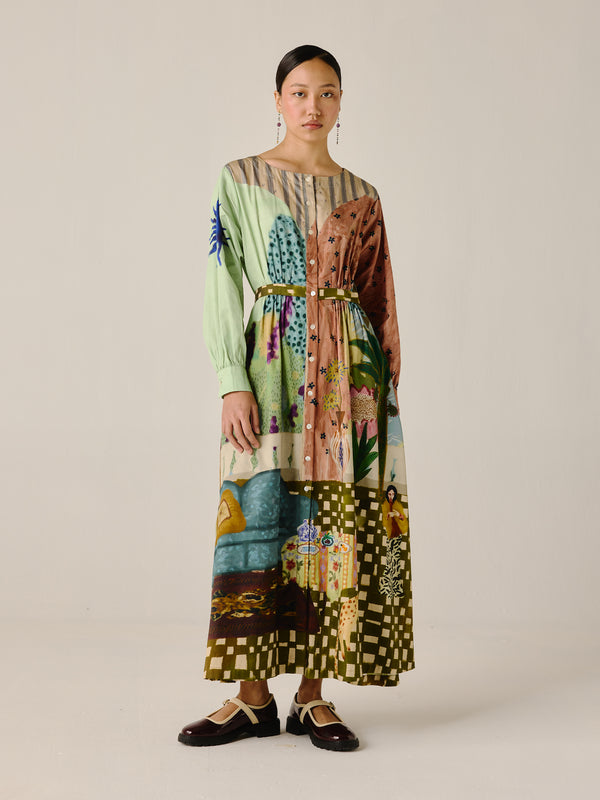
Cotton satin instead of poplin, so it catches light differently and moves with more drape. A tie-up waist belt lets you cinch it in or let it hang loose. Full sleeves and a button front keep it in the family, but the satin pushes it toward date-night or work-dinner territory — shirt-dress ease with more polish.
4. Cross Over Dress
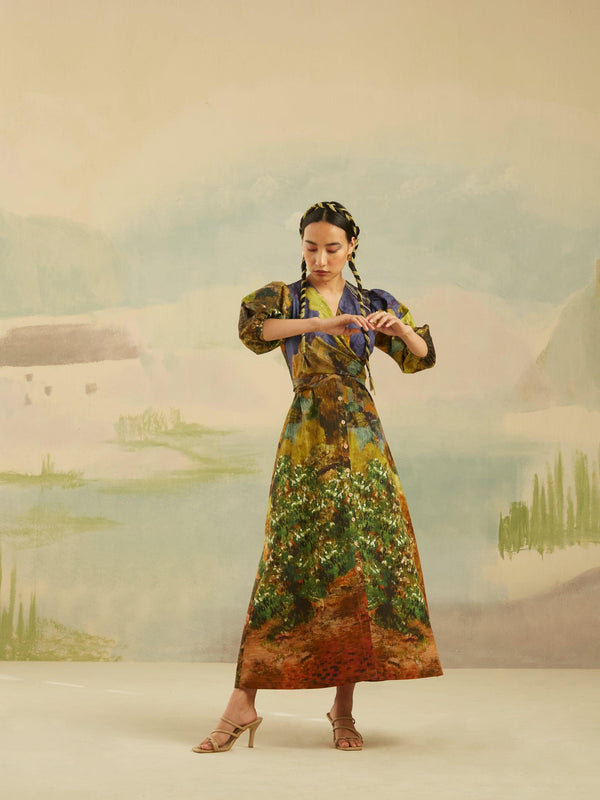
The most playful of the group, and the trickiest to explain. It's A-line with voluminous sleeves and a wrap panel that crosses the body and ties at the back — so the fit adjusts depending on how tight you knot it. Cotton poplin keeps it light despite all that fabric. Throw a belt over it or a crossbody bag, and it goes from a morning walk to dinner without you having to think twice.

5. Tier Dress
Comfort first. Relaxed, flared, with a flat band collar and piping along the seams so it doesn't read as plain. This is the one for travel days or long errands — you get to feel like you're in pajamas while looking like you tried.
6. Beirut Dress
The most structured piece here, hand-stitched in pure cotton with a shawl collar, real side pockets, and a high-low hem that's longer in back. Calf-length, full sleeves, more coverage than anything else on the list - good for cooler days. Small detail, but the pockets mean you can leave the bag at home for a quick outing.

Why This Matters for American Shoppers Specifically
The US market has been shifting toward pieces that last - that's not just a trend line; it's a real change in how people shop. Fast fashion fatigue is real, and more shoppers are asking where a garment came from and what it's made of before they buy it.
Cord's approach - natural fabrics, artisan techniques, seasonless design— lines up with exactly what that shift is asking for. You're not buying a dress that'll fall apart after five washes or that you'll be embarrassed to wear next year. You're buying something with actual craftsmanship behind it, in fabrics suited to how hot and humid most of the country gets for half the year.
Conclusion
A printed button-down dress should do two things well: look put-together and feel comfortable enough to forget you're wearing it. Cord's collection manages both, and does it with fabrics and prints that don't show up on every rack in the mall.
If you're building a wardrobe around pieces you'll actually keep wearing years from now, this is a solid place to start.
FAQs
Q1. What makes a button-down dress different from a regular shirt dress?
A: Not much, really — the terms get used interchangeably. A button-down dress just means the front closes with buttons from top to bottom (or close to it), similar to a men's button-down shirt but cut in a dress silhouette. Some brands use \"shirt dress\" for shorter, more casual versions and \"button-down dress\" for anything with that classic collared, buttoned-front structure.
Q2. Are button-down dresses good for hot weather?
A: Yes, if the fabric is right. Linen and cotton — which is what Cord Studio uses across most of its collection — breathe well and don't trap heat the way polyester or synthetic blends do. That's a big part of why these dresses work so well through American summers, especially in humid regions.
Q3. Can you dress a button-down dress up for evening?
A: Definitely. It depends on the piece and how you style it. Something like the Jane Dress, with its satin finish, already leans dressier. But even the more casual options — the Classic or the Cross Over — can work for evening with the right shoes and jewelry. Swap sandals for heels, add a statement earring, and it moves from daywear to dinner without much effort.
Q4. Do these dresses need to be dry-cleaned?
A: Natural fabrics like cotton and linen can usually be machine washed on a gentle cycle, though hand-finished details like smocking or embroidery hold up better with hand-washing or a delicate cycle in a mesh bag. It's worth checking the care label on the specific piece, since finishes like satin (used in the Jane Dress) may need different handling than plain cotton.
Q5. Why are Cord Studio's dresses priced higher than fast-fashion alternatives?
A: Mostly because of what goes into making them. Hand-smocking, block-printing, and in-house pattern design all take more time and skill than machine-stamping a generic print onto polyester. You're paying for the process as much as the product — and for a dress that's built to survive more than a season or two.
